
How Temperature Affects Lithium-ion Battery Performance?
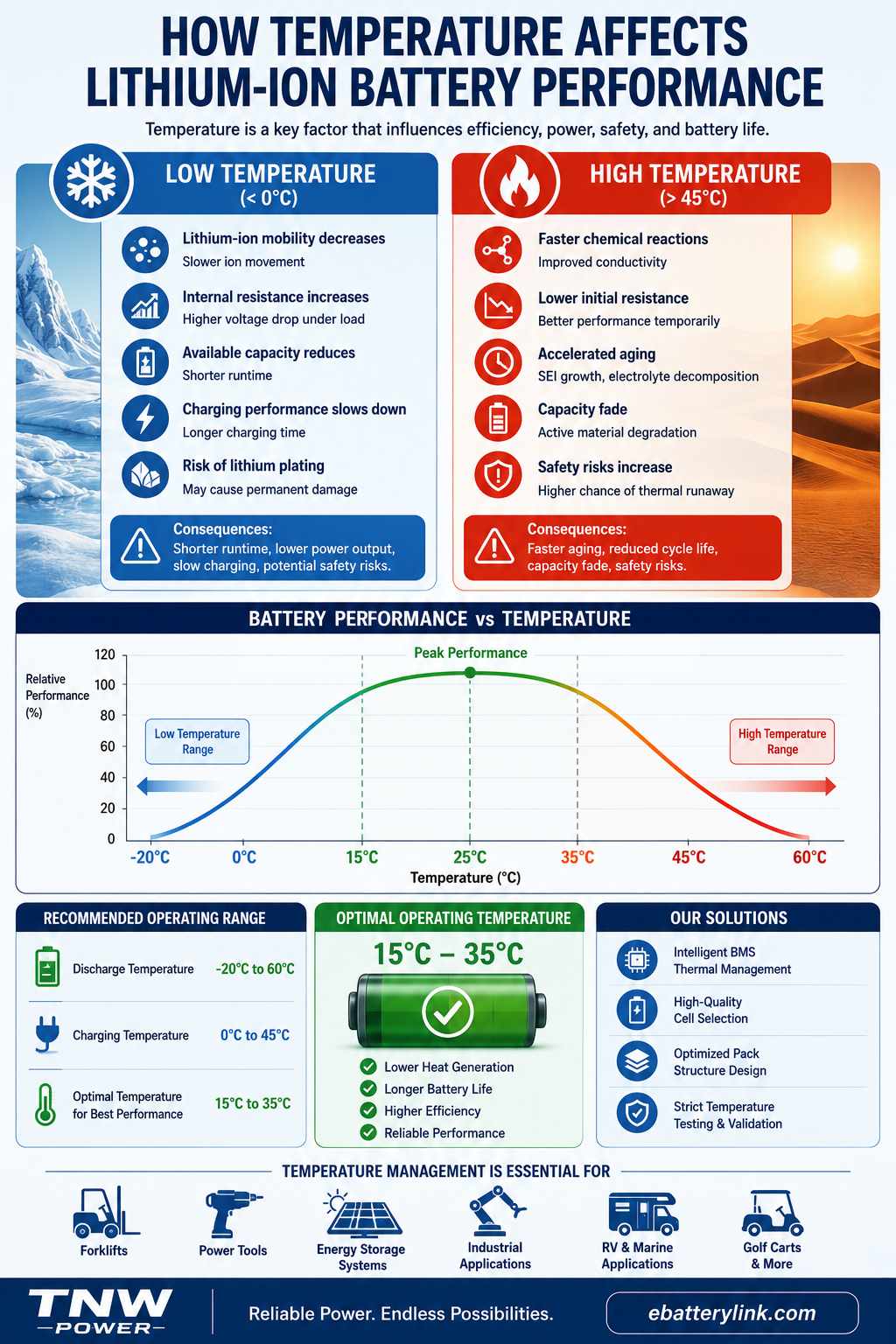
Temperature is one of the most important factors affecting lithium-ion battery performance, safety, and lifespan.
Many battery issues are not caused by the battery itself—but by operating outside the optimal temperature range.
🌡️ Low Temperature Effects
At low temperatures:
• Lithium-ion mobility decreases
• Internal resistance increases
• Voltage drops under load
• Available capacity is reduced
As a result:
⚠️ Shorter runtime
⚠️ Reduced power output
⚠️ Slower charging performance
In extreme cold conditions, lithium plating may occur during charging, permanently damaging the battery.
🔥 High Temperature Effects
Higher temperatures improve conductivity and reduce internal resistance temporarily.
However, excessive heat accelerates:
• Electrolyte decomposition
• SEI layer growth
• Active material degradation
• Capacity fade
Consequences include:
⚠️ Faster battery aging
⚠️ Reduced cycle life
⚠️ Increased safety risks
📊 Ideal Operating Range
For most lithium-ion batteries:
✅ Discharge: -20°C to 60°C
✅ Charging: 0°C to 45°C
✅ Optimal performance: 15°C to 35°C
At TNW Power (ebatterylink.com), we optimize battery design through:
✔ Intelligent BMS thermal management
✔ High-quality cell selection
✔ Optimized pack structure
✔ Strict temperature testing
Because better temperature control means safer batteries, longer life, and more reliable performance.
🌍 Battery performance changes with temperature. Understanding this relationship is key to maximizing battery value.
#LithiumBattery #BatteryTechnology #EnergyStorage #BMS #ForkliftBattery #IndustrialBattery #Engineering
Leave a Reply